Well if I’m gonna be able to get it done in Mu-Tron form-factor ( which means the circuit board dimensions and enclosures mechanics, parts placements ) and SMT (surface mount)components were being used, I could get cracking on redoing the schematics sent to me from Alembic in our system and start layout. Just because you make a pedal it doesn’t mean’t mean anyone is going to buy it. But this seemed like it was gonna get hyped by Mr. X and crew. Also, I noticed discrepancies between the Alembic schematic and the 2 other internet sourced ones that I had. I would decide to go with the Alembic of course, because it was official. I also work with a sharp engineer on this stage of product development to have that second set of eyes. This stage can get expensive as you need to spend a lot of time finding available parts from distributors and inputting the footprints of the parts into the physical layout. I wasn’t going out of pocket on this either. it could range from $2000-20000 for a complex circuit in man hours. If the provided circuit is CORRECT. For now we are trusting it is.
SO Mr.X introduced me to Mr.Y. Mr. Y is a luthier who’s been making really nice replica Jerry Garcia guitars. He’s gonna cut the wood, put in the frets, etc. We pretty much figured where everything was gonna go in the guitar, sizes of cavities, wires, etc. I gave them the dimensions as I already had them down. Basically a game plan. They wanted to use particular knobs and switches, which didn’t matter they could just run wires to my stuff.
So I already knew the costs of the power supplies and they are each. I told them the cost of the Super Filters and QUADS we wouldn’t markup the production costs of the PCB fabrication. robotics pick and place, soldering , . Since you’re only making 10 the price doesn’t start to scale until about 1000.
So with all that said I was guessing the cost to them per unit would be around $300 each. To go into a bass that costs $20000-30000, that’s not too bad. And for all my time and expertise, I was going to make a pedal that they promised to help promote. They still needed the LEDs and breakout box , but I said again NO. They said OK on the pedal and I got to work.
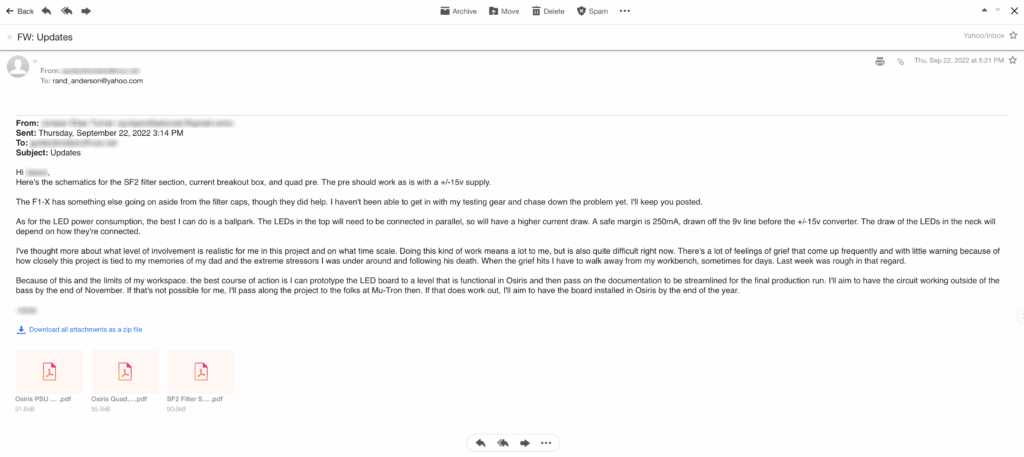
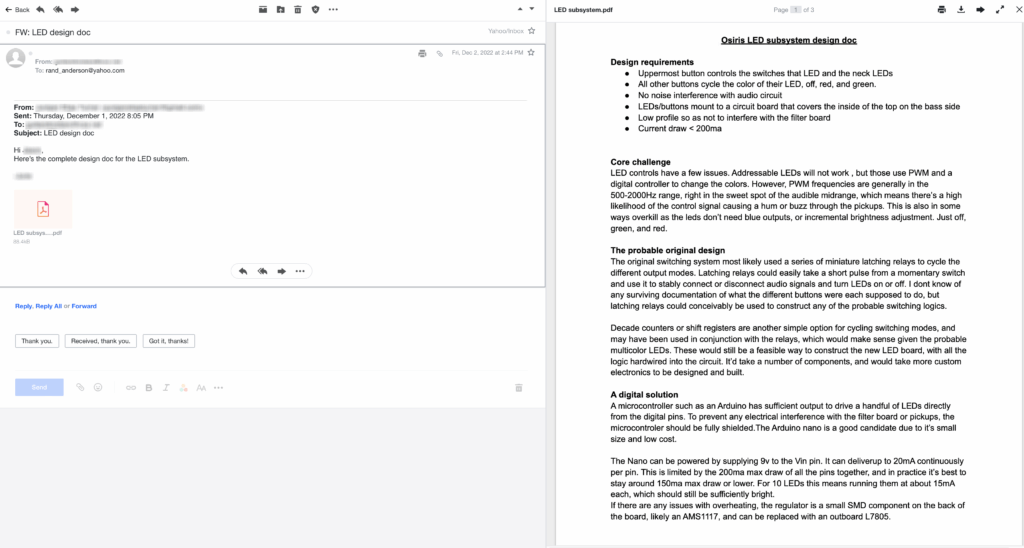
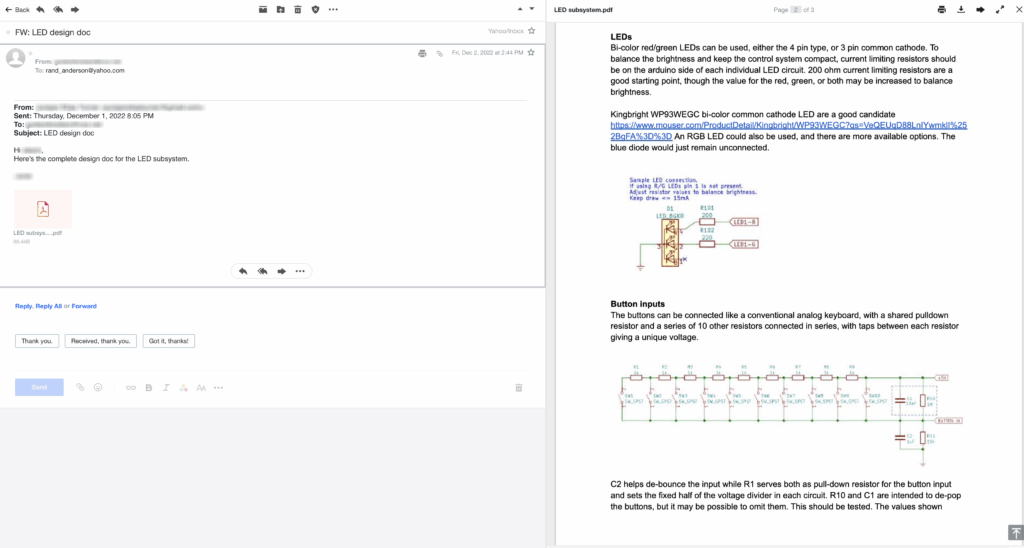
I was provided schematics, from Rick Turner’s daughter working at Alembic. And later she would also send a document explaining her take on the LED system.